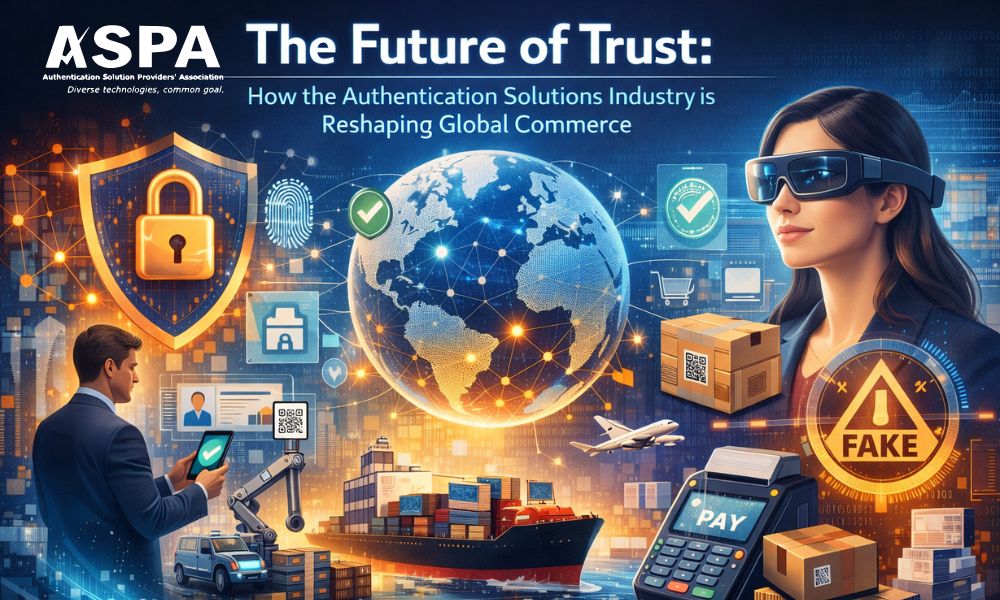
The global marketplace is currently facing a crisis of authenticity, with counterfeit goods draining trillions of dollars from the economy and posing significant risks to consumer safety. In this high-stakes environment, the Authentication Solutions Industry has emerged as the primary line of defense, shifting from a “luxury” add-on to a critical business necessity. By leveraging a sophisticated blend of physical and digital security, this industry provides the tools required to verify the origin of everything from life-saving pharmaceuticals to luxury handbags. As we move deeper into 2026, the question is no longer whether authentication is needed, but how quickly brands can adopt these next-generation technologies to stay ahead of increasingly sophisticated criminal networks.
Are Authentication Solutions the Key to Fighting Counterfeiting Worldwide?
The short answer is yes. Counterfeiting has evolved from simple “street-corner” knockoffs to highly organized digital operations and “super fakes” that are nearly indistinguishable from the original. Traditional security measures are no longer enough. Modern authentication solutions provide a multi-layered approach that creates a “digital twin” for physical products.
- Supply Chain Integrity: By assigning a unique, non-replicable identity to every item, brands can monitor a product’s journey from the factory floor to the consumer’s doorstep.
- Consumer Empowerment: Modern solutions allow customers to use their own smartphones to verify a product instantly, turning every buyer into a frontline inspector.
- Global Standardization: Organizations like ASPA Global (Authentication Solution Providers’ Association) are instrumental in this fight. As a self-regulated non-profit, ASPA Global unites technology providers to establish ethical standards and promote “phygital” (physical + digital) solutions. Their advocacy ensures that authentication is not just a patchwork of tools, but a unified global shield.
What Technologies Are Driving Innovation in the Authentication Industry?
Innovation in 2026 is defined by the convergence of physical security and digital intelligence. The industry is moving away from static labels toward dynamic, interactive systems.
- Blockchain and Distributed Ledgers: This technology provides an immutable record of a product’s history, making it impossible for counterfeiters to “inject” fake goods into a legitimate supply chain.
- Artificial Intelligence (AI): AI-driven tools are now used to analyze microscopic packaging details, detect “deepfake” product listings online, and identify anomalies in shipping routes that suggest illicit activity.
- NFC and Smart QR Codes: Near-Field Communication (NFC) tags and encrypted QR codes allow for “tap-and-verify” experiences, providing consumers with instant proof of authenticity and additional brand content.
- Invisible Taggants and Forensic Markers: These are “covert” features—inks or microscopic particles—that are invisible to the naked eye and can only be verified using specialized lab equipment, providing an ultimate layer of legal proof.
How Is the Authentication Solutions Market Expected to Grow in the Next 5 Years?
The financial trajectory of the authentication sector is exceptionally strong. Current data suggests that the Authentication Solutions Industry is poised for a period of explosive growth between 2026 and 2031.
| Metric | 2026 Estimate | 2031 Projection |
| Market Size (General) | ~$24 Billion | ~$70 – $80 Billion |
| Anti-Counterfeit Packaging | ~$228 Billion | ~$430 Billion (by 2033) |
| Growth Rate (CAGR) | 15% – 19% | Sustained High Growth |
This growth is being driven by the Asia-Pacific region, which is currently the fastest-growing market due to rapid e-commerce expansion and rising government regulations. Meanwhile, North America remains the largest market by revenue, supported by strict intellectual property (IP) enforcement laws and a high concentration of tech-driven brands.
Why Are Brands Investing More in Product Authentication Technologies?
Brands are no longer looking at authentication as just a cost; they see it as an investment in Brand Equity and Digital Trust.
- Consumer Safety: In sectors like pharmaceuticals and food, a counterfeit product can be fatal. Brands invest in authentication to protect their customers’ lives and avoid devastating legal liabilities.
- Regulatory Compliance: Governments worldwide are mandating “track-and-trace” systems. Failure to comply can result in massive fines and loss of operating licenses.
- Market Intelligence: Authentication systems provide brands with real-time data on where their products are being sold and how they move through the market, helping to identify “grey market” leakages.
- Sustainable Reputation: With the rise of the circular economy, authentication helps verify the “sustainability claims” of a product, ensuring that recycled materials or ethically sourced goods are genuine.
“A product without authentication represents a significant potential risk to both the society and the brand owner. By enabling consumers to identify a genuine product, brands build a foundation of loyalty that far outweighs the cost of the technology.” — ASPA Global Industry Insight
Conclusion
The Authentication Solutions Industry is the silent guardian of the modern economy. From the high-level advocacy of ASPA Global to the cutting-edge implementation of AI and Blockchain, these technologies are the only way to ensure trust in a globalized, digital-first world. As the market continues to expand toward the $80 billion mark over the next five years, businesses that fail to adopt these solutions risk losing not just their revenue, but their most valuable asset: the trust of their customers.

 Authentication Solutions Industry | ASPA Global